Janitorial service
For recurring maintenance with area-specific checklists.
Learn about Janitorial serviceServing Rochester, Minnesota & surrounding areas
Mon–Fri 8am–6pm · Sat 9am–2pm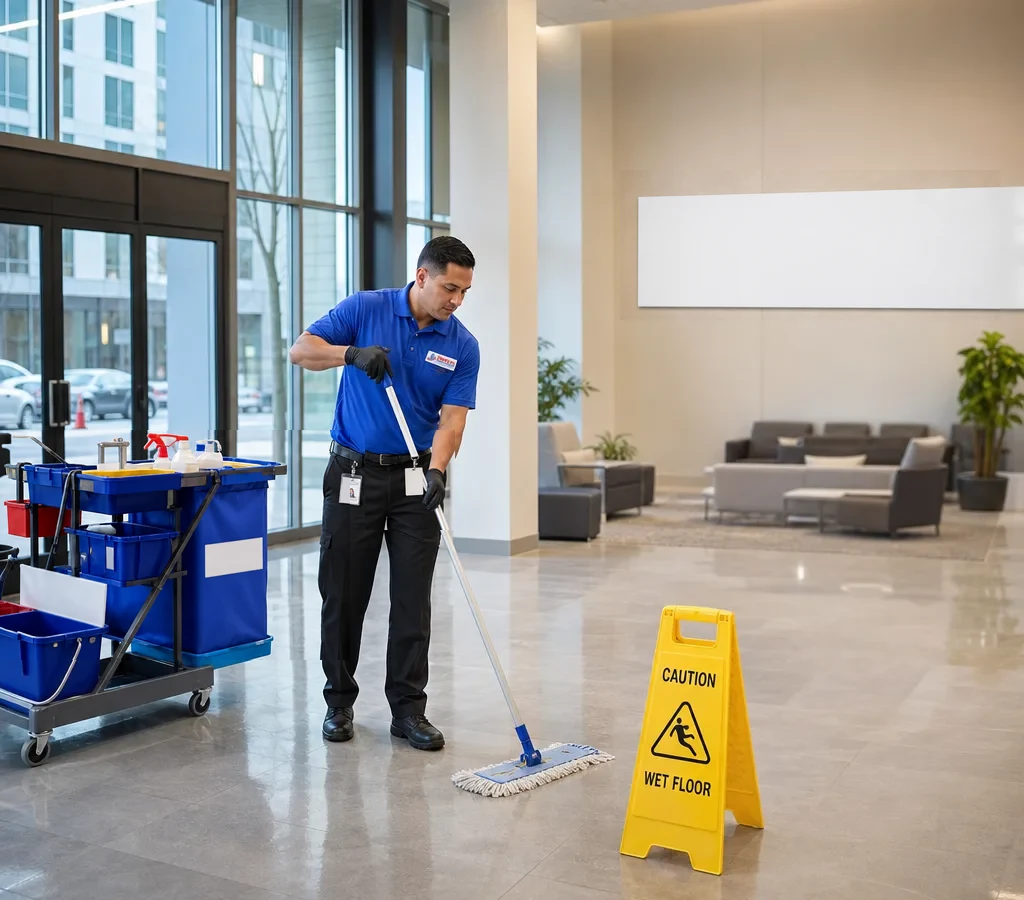
Medical Facilities · Rochester, Minnesota
People arrive at a medical building carrying more than a coat. They may be waiting on a result, bringing in a child, or supporting someone they are worried about.
Before anyone speaks to them they read the room for evidence that the place is looked after: the entry glass, the waiting chairs, the restroom, the floor around reception. A patient does not separate a smudged check-in counter from the rest of the visit. The building becomes part of how the care itself feels, and that judgment is made in the first minute.
Thoughtful cleaning for professional care settings
The plan starts with the spaces people move through under stress and the surfaces where repeated contact or foot traffic becomes visible quickly.
A patient may not know when a floor was last maintained, but they know when it looks dull, streaked or gritty. They may not inspect a restroom, but they notice when it does not feel attended to. Scope depends on arrival patterns, the size of the waiting area, restroom volume, the flooring, and where the line falls between public and staff-only space.
What patients notice
A patient may not know when a floor was last maintained, but they know when it looks dull, streaked or gritty. They may not examine a restroom, but they notice when it does not feel attended to. They may say nothing about prints on an entry door, and still carry the impression into the appointment.
This is why a clean medical building is not simply one that has had a service visit. It is one that holds up under real traffic. Chairs, doors, counters, glass, floors and restrooms are used repeatedly by people arriving under stress, and the cleaning has to be built around that pattern rather than around a room list.
The distinction matters more here than in most towns. A large share of patients arrive from outside the city with no familiarity with the building or the organisation inside it, so they form a judgment from the environment alone. A clear entry, an orderly waiting area and a clean restroom do a quiet amount of work before anyone is called through.
Local planning
Rochester is a medical town, and a large share of the people walking into these buildings have travelled in from outside the city. They are finding their way through an unfamiliar building, often under stress, with no prior sense of the organisation inside it. The environment is most of what they have to go on. Winter makes the entry the hardest part to hold: salt, snowmelt and grit arrive on shoes and wheels all day and spread quickly from the door into reception, so a floor that was clean at opening can look neglected before midday.
Related services
For recurring maintenance with area-specific checklists.
Learn about Janitorial serviceFor detailed reset work outside a normal visit.
Learn about Deep cleaningBefore you call
Start with the patient route: entrance, check-in, waiting area, public restroom, corridors and the visible seating and glass. Then review staff space separately. Patient flow, hours, flooring and restroom volume decide where the effort concentrates.
People waiting have time to look closely. They see the chair arm, the side table, the floor line and the surfaces around reception. A room that looks acceptable from the door can still feel unattended at arm's length.
Salt, snowmelt and grit reach the entrance throughout the day, then travel into reception on shoes and wheels. Concentrating attention on the entry route keeps winter material from being the first thing a patient sees.
Ready to discuss your facility?
Patients and visitors should find a building that looks orderly and ready for them. For medical facility cleaning in Rochester, call (507) 322-1140 or email [email protected].
Request a quote
Tell us about your medical facility, the areas that need attention, and your preferred schedule.