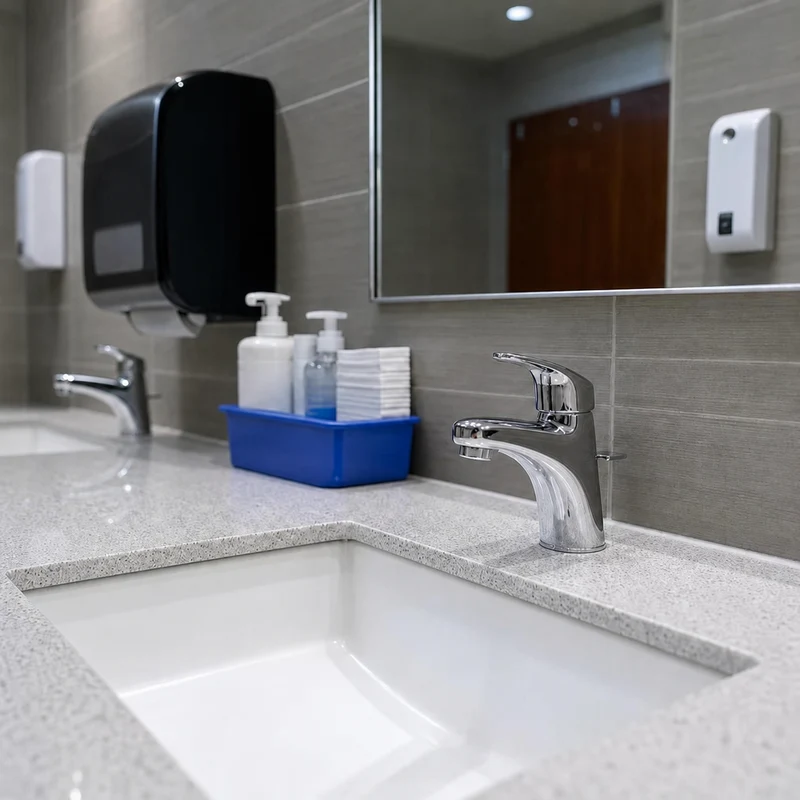
Reliability is not a vague promise of regular cleaning. It means knowing what will be cleaned, when, and which areas will be ready afterward. Without that, the deferred work lands on the people who are already busy: the entry, the counter, the break room, the restrooms and the floor paths that everyone uses and nobody owns.
- ✓A written scope, not an assumption: The public side and the staff side of the building are mapped separately, because the places where use shows first are not the same in each.
- ✓Frequency set by traffic: A busy front door and a rarely used back office do not need the same attention. Matching the two is what stops staff filling gaps.
- ✓Specialist work on its own cycle: Window cleaning, deep cleaning, floor care, post-construction and industrial cleaning are planned rather than squeezed in, so the routine visit stays intact.
Seasonal debris reinforces the need for a standard rather than an improvisation. Winter brings salt and slush to the entry, and warmer months bring gravel and dust from lots and surrounding roads. The routine removes what is visible; floor care and deep cleaning provide the periodic reset that stops grit turning into a permanent traffic path. The point of all of it is that the building's condition should not depend on who happened to have ten spare minutes at closing time.